Talking Science from a Soapbox

Talking Science from a Soapbox

On July 9 I was up on a soapbox, talking about my science to unsuspecting shoppers in the Milton Keynes Centre.  I took part in Soapbox Science, an initiative of Drs Seirian Sumner and Nathalie Pettorelli, which brings science to the public and increases the visibility of women in science.  First run on Southbank in London, 2016 was … Continue reading

PhD Studentship opportunity! Sexually deceptive orchid pollination strategies: is one true love or broad sex appeal best?

PhD Studentship opportunity! Sexually deceptive orchid pollination strategies: is one true love or broad sex appeal best?

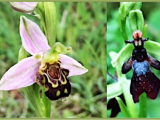
**Applications for this project have now closed** Sexually deceptive orchids achieve pollination by mimicking the pheromones and appearance of female insects. The orchids entice males to try to mate with the flowers and pollen is spread through repeated deception among flowers. In this way orchids avoid the costs of producing nectar, but mimicking pheromones and … Continue reading

Solving the mystery of the algal balls at Dee Why

Solving the mystery of the algal balls at Dee Why

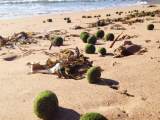
In September and October 2014, hundreds of algal balls washed up on Dee Why Beach, Sydney.  It was an unexpected and spectacular sight which drew media interest from all over the world, especially as these balls had never been recorded in Sydney before.  Matthew Bulbert and I went to see them and began a quest to discover what … Continue reading

The Poetry Bug

The Poetry Bug

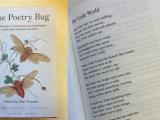
A wonderful anthology of poems about insects has just been published and I am very excited that it includes my poem, My Little World (also a picture book by the same name).  The Poetry Bug is a collection by English entomologist John Tennent.  The book features old favourites such as The Spider And The Fly by Mary … Continue reading

Weedy changes caught on postcards

Weedy changes caught on postcards

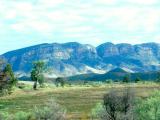
In 2002-3 I did my Honours project at the Australian National University with fieldwork in the Flinders Ranges National Park.  My project was an autecological study of Carrichtera annua, also known as Ward’s Weed.  But this area wasn’t always covered in Ward’s weed. The pictures on  postcards and my photos record a succession of weeds (mistaken for native wildflowers because … Continue reading

Milton Keynes: first impressions

Milton Keynes: first impressions

I’ve just moved to Milton Keynes, Buckinghamshire, UK, about 70km northwest of London. Planned and built in the 1970s, it’s a new town in English terms, making it pretty interesting and innovative. Writing about it has the dual purpose of helping me learn about my new home, and telling curious family/friends/colleagues a bit about it. Milton … Continue reading

Preparing for interview questions

I received much help and advice from colleagues and friends about how to prepare for interviews post-doc and academic positions.  In turn others have asked for my help, so here I’m posting my best advice and potential questions.  Questions have been compiled from interviews I’ve done as applicant and panel member, lists sent by colleagues and example questions … Continue reading

Silver linings in unsuccessful applications

Silver linings in unsuccessful applications

For early career researchers, applying for jobs and fellowships can be a good opportunity to network, learn and develop new research directions with leaders in their field.  There can be big benefits – even if the application is unsuccessful. As an ECR, I’ve applied for several fellowships, post-docs and academic positions, and certainly chalked up unsuccessful applications in … Continue reading

Teaching prize!

It was great to end 2014 with a Faculty of Science and Engineering Award for Excellence in Sessional Teaching from Macquarie University.  These awards recognise the increasing contribution of casual academic staff.  This followed winning Second Place in the inaugural Creativity and Contributions in Teaching Award (CACTA) with Matthew Bulbert in 2013 for “Identifying and Understanding Key Findings and Effectively … Continue reading

School scientists study christmas tree longevity

School scientists study christmas tree longevity

Together with Prof. Angela Moles, I’ve been working with a group of Year 7 students and their science teacher Nikki Zimmerman from Kambala to investigate how to make your Christmas tree  last longer.  As part of the brilliant Scientists in Schools program, Angela and I visited the students at least weekly over the last couple of months. … Continue reading